
ORGAN SPECTACULAR XI
Our 11th Annual Organ Spectacular
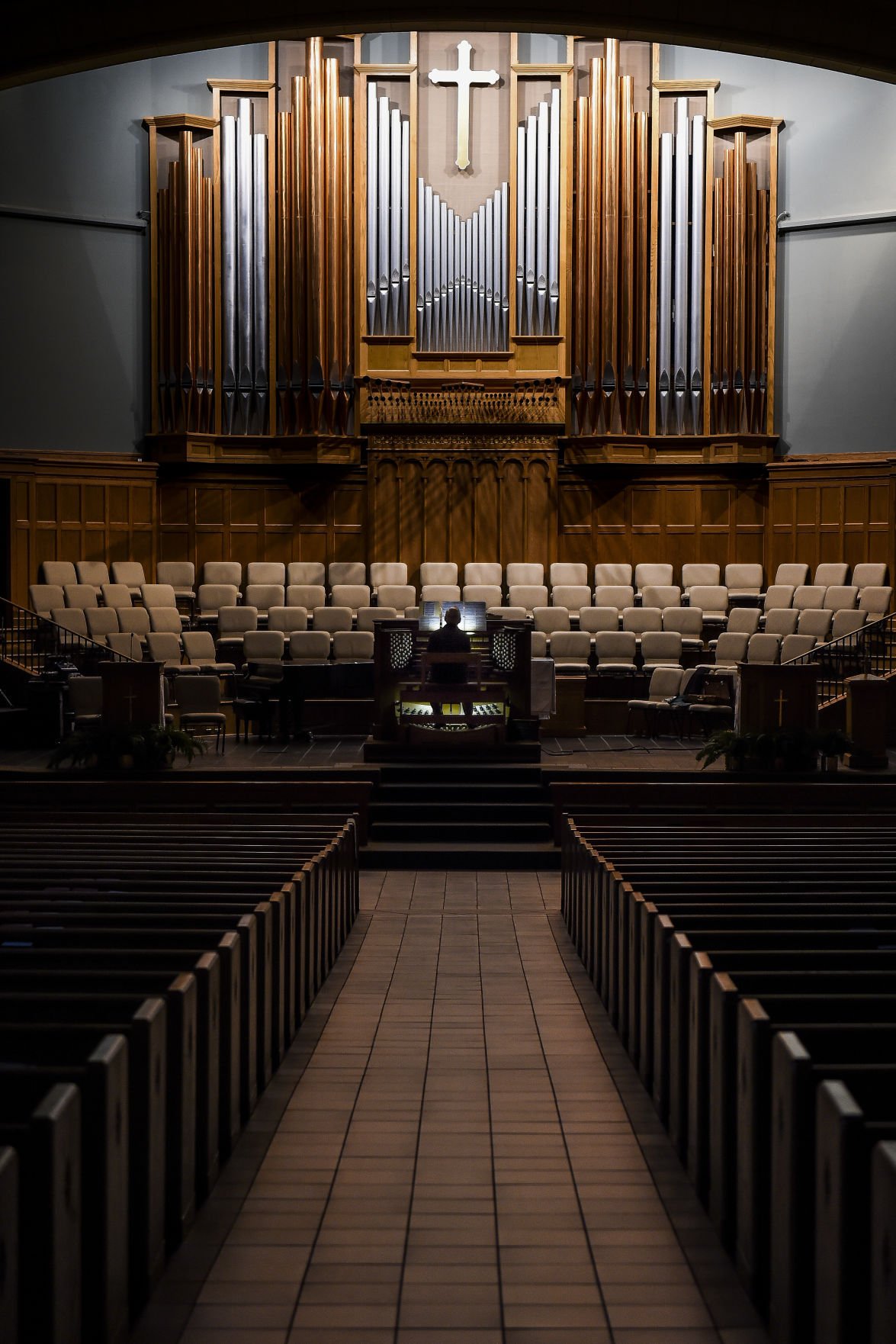
The Organ Spectacular returns with four incredible Colorado organists. Featuring the largest musical instrument in Colorado Springs – the “king of instruments” – we continue our exploration of one of the most fascinating and colorful corners of the classical music world.
Organ Spectacular regulars Joseph Galema and Eric Wicks are joined by Zahari Metchkov and Denver-based organist Cindy Lindeen-Martin.
Georg Frideric Handel — Organ Concerto in A major, op. 7, no. 2
Emma Lou Diemer — Concerto in One Movement for Organ & Chamber Orchestra
Joseph Rheinberger — Organ Concerto no. 1, op. 137 “Romantic”
Craig Phillips — Concertino for Organ & Chamber Orchestra
RUN TIME: 1 hour, 43 minutes (including intermission)
You’ll See: Your Favorite Local Organists

You’ll Hear: The “King of Instruments”

You’ll Feel: Music at Its Most Visceral

One Day Only:
SEPT 20th
2026
Sunday, 2:30PM
First United Methodist Church
More Than A Concert: Your ticket also gets you into:
Pre-Concert Lecture in the FUMC Theater by our soloist, Eric Wicks, a noted specialist in music of the Baroque Period. He will discuss special features of the Concerto in A Major by George Frideric Handel that he will later perform during the concert. We hope to see you there!
Build an actual Organ! We will have a demonstration area where kids and the young-at-heart can try their hand building a working instrument, and learn about the technology needed to power a miniature version of the King of Instruments! Join Dr. Donald Zimmermann for an interactive exploration of an organ's inner workings!
This Concert’s Music Made Possible by:
Concert Sponsor:

2026-27 Season Sponsor:
Music Sponsors:

Anonymous
Guest Artist Sponsors:
Anonymous
Carol & Jim Montgomery
Featuring:
-
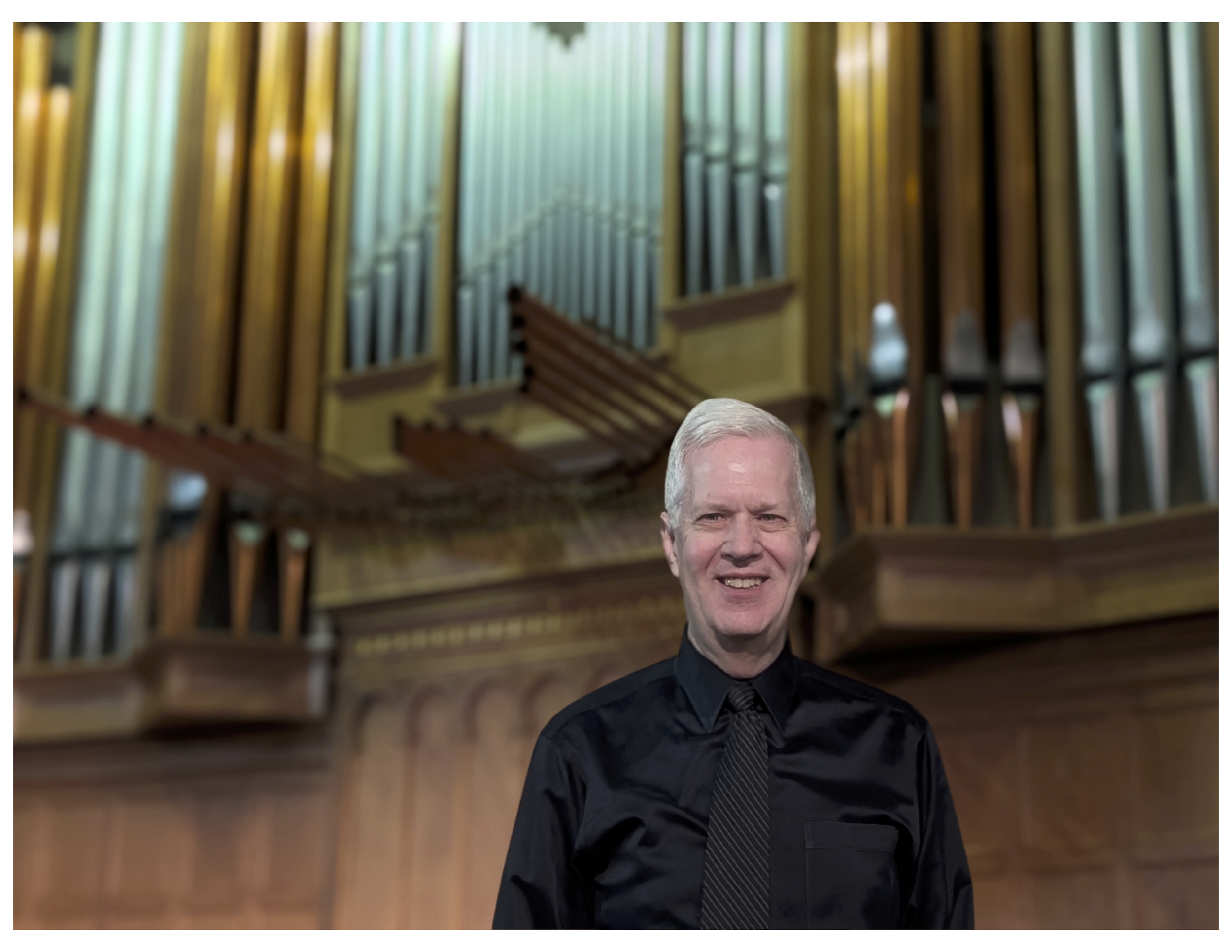
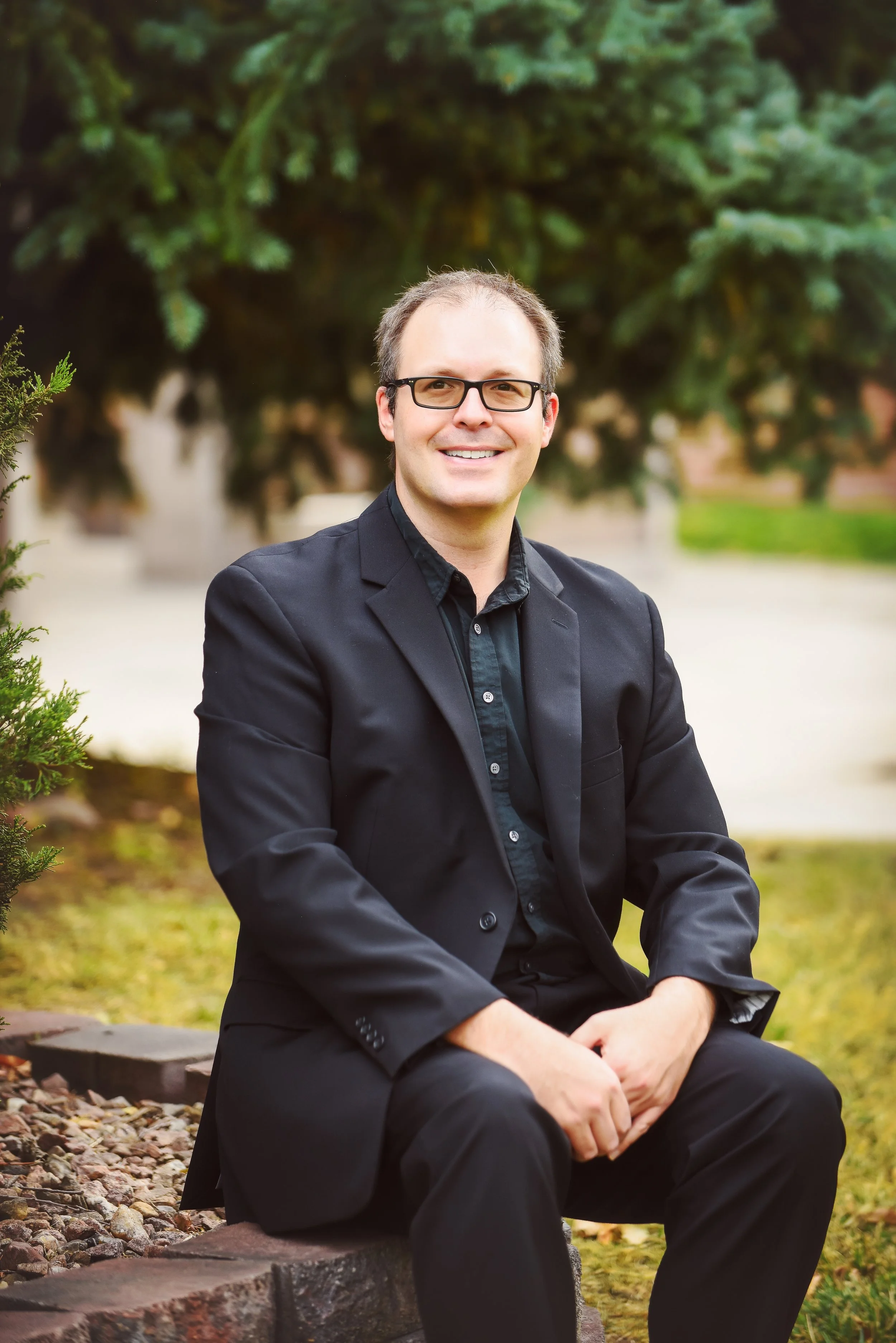
Joseph Galema is widely recognized as a distinguished organist, educator, and musician who has built a reputation for both artistic excellence and a deep commitment to fostering musical growth in others.
Joe’s journey into the world of music began at a young age, where he showed an early affinity for the organ and piano, instruments that would later become central to his artistic identity. He pursued his undergraduate studies at Calvin University, and continued his graduate level education at The University of Michigan, earning Master of Music and Doctor of Musical Arts degrees in organ performance under the tutelage of renowned artist-teacher Marilyn Mason.
He currently serves as Organist at First United Methodist Church in Colorado Springs, and is also Collaborative Pianist for the Colorado Springs Chorale. For 16 years, he was adjunct organ faculty at the University of Denver’s Lamont School of Music. He retired in July 2014 as Music Director and Academy Organist at the United States Air Force Academy, after serving there for 32 years.
Joe is celebrated for his dynamic performances as a solo organist and collaborative musician. He has appeared in concert venues across North America and Europe, celebrated for his expressive nuance and technical command. In addition to solo recitals, he has been an active participant in concerts with the Denver Brass, as well as orchestral collaborations including Chamber Orchestra of the Springs and the Colorado Springs Philharmonic. He has performed in all ten Organ Spectacular concerts.
In addition, Joe has contributed to the field of musicology through research, publications, and presentations. His scholarly interests include the history of organ literature, performance practice, and the role of music in cultural and religious contexts.
Throughout his career, Joe has received numerous awards and honors in recognition of his artistic achievements and professional service. His accolades reflect not only technical mastery but also his influence as a mentor, leader, and innovator in the musical arts.
-
Eric Wicks, organ, has served at First Lutheran Church in Colorado Springs since 2013 and is currently Minister of Worship and Music. He is also on the music faculty at Colorado College, serving as organist at Shove Chapel, teaching organ and harpsichord, and performing with the Collegium Musicum. With his wife Elisa, Eric helped found Parish House Baroque – Colorado Springs’ only professional early music ensemble – and plays harpsichord with the group.
At a very young age, Eric knew he wanted to become an organist and began his studies with John McCreary at St. Andrew’s Episcopal Cathedral in Honolulu, Hawaii. Eric also studied with Kraig Scott at Walla Walla College (now University) in Washington State before receiving both bachelor’s and master’s degrees with Todd Wilson at the Cleveland Institute of Music, where he was awarded the Henry Fusner Prize in organ performance.
Eric has appeared with the Chamber Orchestra numerous times as an organ and harpsichord soloist. In the Denver area, he has performed with the Colorado Chamber Players; closer to home, he was invited to join with the faculty of the 2024 and 2025 Summer Music Festivals at Colorado College in performances of Bach’s fourth Brandenburg concerto and portions of the Musical Offering. Eric has performed numerous organ recitals, including on the Brattle Organ, the oldest organ in North America. On harpsichord, Eric has performed on the collection of instruments at the Cleveland Museum of Art and in house concerts hosted by harpsichord builder Philip Cucchiara.
Prior to his time in Colorado, Eric served churches including First United Methodist in Butler, Pennsylvania; Old Stone Church (First Presbyterian) in Cleveland, Ohio; St. Peter’s Episcopal Church in Lakewood, Ohio; and St. Paul’s Episcopal Church in Kennewick, Washington. In Cleveland, Eric sang with the Cleveland Opera Chorus; in Pennsylvania, he was invited to serve as guest director of the by-audition-only Blazing Star Choral Society.
In addition to the organ, Eric studied harpsichord with Janina Ceaser, piano with Olga Radosavljevich, eurhythmics with David Brown, and early music performance practice with Ross Duffin.
-
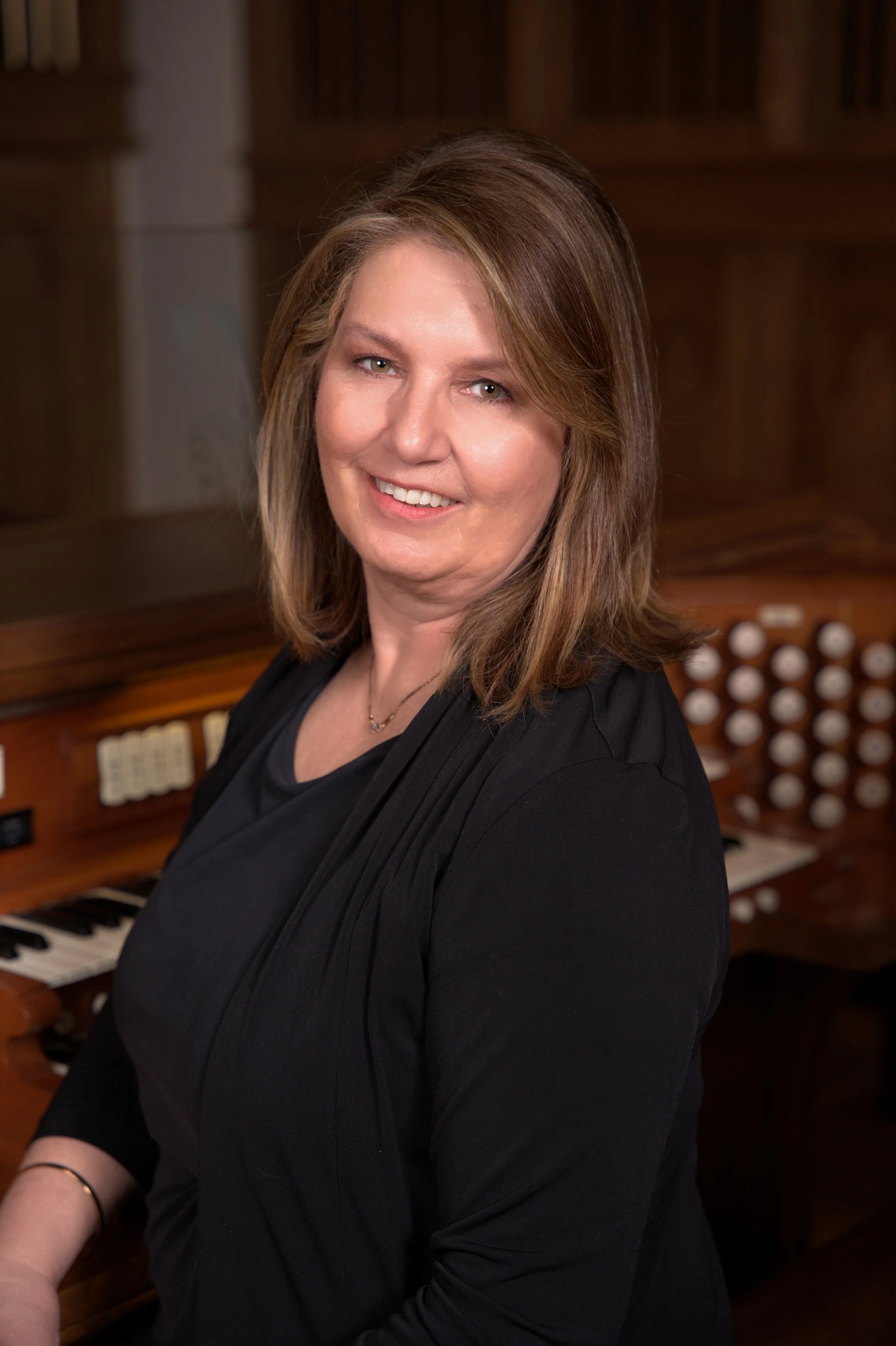
Dr. Cindy Lindeen-Martin serves as Director of Music and Organist at Church of the Ascension in Denver, Colorado, where she leads a growing music ministry with vocal and handbell choirs. She was recently appointed Adjunct Faculty in Organ at the Lamont School of Music, University of Denver.
Lindeen-Martin is in demand as performer, instructor, lecturer, and adjudicator. She has concertized in Europe, Mexico, and in the East and Midwest United States. As a resident of Colorado, she is a frequent performer here, as a soloist or in collaboration with others, including Denver’s Stratus Chamber Orchestra, the Denver Brass, Stellar Brass (Air Force Academy), and the respected Denver-based choir, Kantorei. She has several concerto performances to her credit, including those of Handel and CPE Bach, Poulenc’s “Organ Concerto for Strings and Percussion”, Jongen’s “Symphonie Concertante”, and the famous, well-known Saint-Saens’ “Organ Symphony”.
Lindeen-Martin has taught private organ lessons for many years and is dedicated to mentoring young organists pursuing careers in performance and church music. She has also founded and chaired undergraduate organ competitions, including the Ottumwa National Undergraduate Organ Competition and the former Augustana Arts/Reuter National Undergraduate Organ Competition.
Dr. Lindeen-Martin holds a Doctor of Musical Arts and Performer's Certificate from the Eastman School of Music, where she studied organ with Dr. David Craighead and Mr. Russell Saunders, and harpsichord with Dr. Arthur Haas. She earned her MM and BM degrees from Colorado State University, studying piano with Dr. Janet Landreth and organ with Mr. Robert Cavarra. She also completed advanced studies in France, receiving the Degré d’Excellence from the Conservatoire de Rueil-Malmaison under Madame Marie-Claire Alain and Madame Susan Landale.
Outside of music, Cindy enjoys reading, yoga, baking, cooking, entertaining, hiking, gardening, and spending time with her family.
-
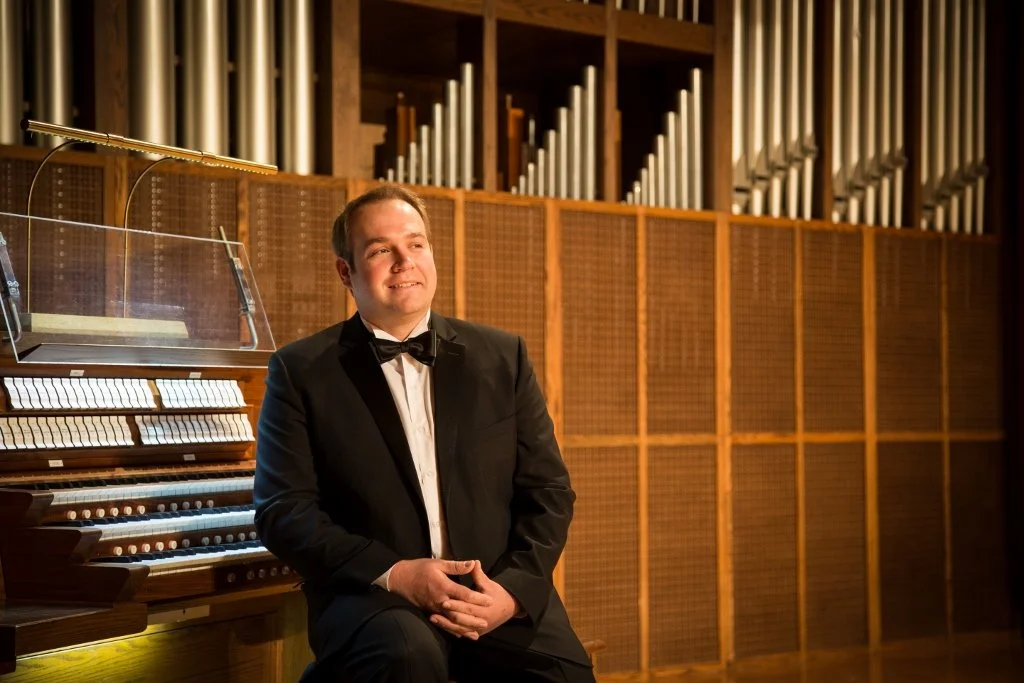
Both a pianist and an organist, Dr. Zahari Metchkov has performed at such venues as New York’s Avery Fisher Hall and Washington’s Kennedy Center. He has concertized in China, Israel, Bulgaria, and the United States. Dr. Metchkov released his first CD in 2008 - a recording of works for piano and orchestra by Franz Liszt and Cesar Franck and a second recording project featuring solo works for piano and organ completed in the Spring of 2014. In 2022, he premiered and recorded with the Pueblo Symphony his orchestration for piano and orchestra of Rachmaninoff’s Fantasy No. 1, originally for two pianos.
A native of Sofia, Bulgaria, Dr. Metchkov holds DMA and MM in piano performance and BM double major in Piano and Organ performance from the Cleveland Institute of Music, Cleveland, Ohio. He is a Professor of Music at Colorado State University Pueblo, teaching applied piano, applied organ, chamber music, and pedagogy. Zahari was the 2013 recipient of the CSU Pueblo’s Outstanding Service and Transformative Leadership Award and the 2014 recipient of CHASS Outstanding Faculty of the Year. In 2018, he received the Steinway & Sons Top Teacher Award. In 2022 he received the Colorado State Teachers Association “Teacher of the Year” Award. Dr. Metchkov has also taught at the Cleveland Institute of Music as well as Youngstown State University. Currently Dr. Metchkov is the Artistic Director of the Pueblo Keyboard Arts Festival and Piano Conversations Concert Series, Pueblo.As a performer he has appeared in the Mostly Mozart Music Festival, Pianofest in the Hamptons, Bridgehampton Music Festival, Sofia Music Weeks, Varna Summer Music, Geneva Chamber Music Festival, New Year’s Music Days Festival, and San Angelo Piano Festival, Varna Music Festival, and Sofia Music weeks. He has appeared live on radio CPR-Denver, WCLV-Cleveland, Bulgarian National Radio, Radio Alma Mater-Sofia.
Placing high priority over the education of young keyboard players in Southern Colorado, Dr. Metchkov has served in numerous roles including as President of the Colorado State Music Teachers Association, a chapter of the Music Teachers National Association. Students from his private studio have garnered state and national awards. He is a founding member of the Southern Colorado Music Adventure Camp.
Dr. Metchkov has been enjoying an active artistic life as a soloist, chamber artist, as well as church musician. He has been a guest artist with the Pueblo Symphony, Chamber Orchestra of the Springs, Cleveland Institute of Music Orchestra, Colorado State University Pueblo Orchestra, Colorado State University Pueblo Wind Ensemble, Suburban Symphony, University Circle Chorale, University Circle Wind Ensemble, and Pleven Philharmonic. Notable organist posts include Epworth Euclid UMC, Cleveland; Ascension Episcopal Church, Pueblo; First Christin Church, Colorado Springs.Besides music, he also enjoys skiing, bonsai, and in 2020 completed climbing Colorado’s fifty-four 14ers. He was named the Rocky Mountain Bonsai Society 2022 Emerging Bonsai Artist and in 2024 taught “Introduction to Bonsai”, one credit course at CSU Pueblo as part of the Creative Wellness program. In 2025 he was named Rocky Mountain Bonsai Society’s 2026 Artist of the Year.
Learn About the Music:
-
Composed 1743, by George Frideric Handel (1685-1759).
The organ concertos of Op. 7 were published two years after Handel’s death by the English printer John Walsh. Rather than having been composed as a set, however, these concertos were collected by Handel’s student John Christopher Smith, Jr. (1712 – 1795), who assisted the composer during the final years of his life.
After success as a composer of opera, Handel turned his creative genius to oratorio – large-scale works that were performed in concert halls without staging. Faced with an orchestra pit of professional musicians who had nothing to do between acts, he developed the organ concerto as a genre, partly because it served as the perfect vehicle for him to showcase his own talents as a keyboard virtuoso. The concertos were a hit, and they nearly threatened to overshadow the oratorios. The London Daily Post captured the public’s desire for “the latest and greatest” when, on April 4, 1739, it announced “At the King’s Theatre … this Day … will be perform’d a New Oratorio … With several concerto’s on the Organ, and particularly a new one.”
Since the concertos were performed in the orchestra pit, they utilized small chamber organs with just a few sets of pipes, usually with only one keyboard, and without pedals. In the Baroque, all English organs were smaller than their Continental counterparts; in fact, only one piece by Handel requires pedals. But the English organs had a sweet and full sound, ideal for choral and chamber music.
The Organ Concerto in A Major (premiered February 18, 1743) has four movements. The first, an energetic overture in French style, features dotted rhythms and quick scales. The second movement is a fugue interrupted by virtuosic toccatas. The final movement was originally written in 1741 as the overture for Samson.
Handel was a gifted improviser. According to Charles Burney (1726 – 1814), no one “… had ever before heard such extempore, or such premeditated playing, on [the organ] or any other instrument.” It should come as no surprise, then, to discover places in the score marked ad libitum – places for the organist to embellish a cadence, freely lead into an orchestral tutti, or even improvise (as in the case of the third) an entire movement. According to scholars Eva Gerlach and Ingelborg Schneider, “obviously Handel extended the passage by improvisation and wrote only the bars which establish the theme.” (In today’s performance, we are using material composed in historic style by Dutch scholar and organist Ton Koopman.)
All three written-out movements use themes from harpsichord works by Gottlieb Muffat (1690 – 1770; the son of violin theorist Georg Muffat). The first movement borrows from Muffat’s Componimenti musicali per il cembalo; the second movement uses the theme of an unpublished ricercar; and the final movement is La Coquette, the sixth suite of the same Muffat composition. (Turnabout is fair play: Muffat borrowed from Handel’s 6 Fugues for Keyboard of 1735.)
Note by Eric Wicks.
-
Composed 1995, by Emma Lou Diemer (1927-2024)
Alyeska, the “great land.” The land where the world begins in ice. Vast, uncontained, always changing and renewing itself in its own rhythm and time. Stubbornly wild. A place of contrasts: a winter that holds everything in utter stillness and a summer that bursts forth with urgency, knowing its days are numbered. A land where the midnight sun stretches until it loses its edges.
This sense of breath and expansiveness is captured in Emma Lou Diemer’s Concerto in One Movement for Organ and Chamber Orchestra “Alaska.” Written in 1995 for conductor Madeline Schatz and the Arctic Chamber Orchestra, it premiered in January 1996 at the University of Alaska Fairbanks, with the composer herself as organ soloist.
Born in Kansas City, Missouri, Diemer had a lifelong career as a composer, performer, and educator. She earned her bachelor’s and master’s degrees in composition from Yale, studied in Brussels on a Fulbright Scholarship and at the Tanglewood Music Center, and completed her doctorate at the Eastman School of Music. After twenty years at the University of California, Santa Barbara, where she helped establish the electronic/computer music program, she became Professor Emeritus in 1991. Her significant contributions to the field were recognized in 1995, when the American Guild of Organists named her Composer of the Year.
In the “Concerto in One Movement for Organ and Chamber Orchestra”, rather than a literal depiction of geography, Diemer uses evocative musical references in her concerto to explore place and cultural memory. She brings together three distinct musical ideas: an Inuit rhythmic pattern; the opening phrase of the Passion Chorale by the 16th-century composer Hans Leo Hassler (“O Sacred Head, Now Wounded”); and the traditional Hebrew melody Yigdal, also known as the Western hymn tune Leoni (“God of Abraham Praise”).
These diverse voices come together through a unique relationship between soloist and orchestra. Instead of setting the organist against the ensemble, Diemer creates an interplay in which the orchestra often seems to absorb and reflect the organ’s sound. At times, the orchestral colors seem to extend and echo the organ, blurring the boundaries between the forces.
The concerto begins with a broad, sustained opening that evokes a frozen, expansive vastness. This icy world is shattered as the music moves into a rhythmic section driven by shifting, asymmetrical pulses drawn from Inuit rhythmic patterns. As momentum slows, a more reflective central section makes room for the sacred melodies: listen for subtle hints of the Passion Chorale while Yigdal emerges in a stunning oboe solo. A brief, virtuosic organ cadenza showcases the full range of the instrument, bridging the music into a finale that drives to a powerful climax.
Diemer’s life was closely connected to sacred music. For me, the historical connections in “Alaska” are not simply religious references, but cultural artifacts recontextualized through a modern musical lens. I hear “Alaska” as a “hymn to the land,” a prayer of renewal shaped by the awe of a sacred landscape. By bringing the Passion Chorale and Yigdal together with Indigenous rhythmic traditions, Diemer creates a musical landscape shaped by different histories, memories, and spiritual resonances. The “Great Land” becomes more than a geographical setting: it becomes a place where human memory and the natural world meet.
Note by Pamela Chaddon.
-
Composed 1884, by Josef Gabriel Rheinberger (1839-1901).
Josef Gabriel Rheinberger was born in 1839 in Vaduz, Lichtenstein, and was among a generation of late 19th-century composers who wrote prolifically for all genres of music including piano and organ, choral, chamber music, symphonies and operas. He was a gifted musician from a very young age, playing organ during church services in his hometown from age seven, and later being offered a professorship at the age of 19 for piano, organ and eventually composition at the Munich Conservatory. Although he did not achieve the lasting fame of contemporaries like Brahms, Tchaikovsky or Dvořák, he was influential as a pioneer, breaking strict rules for motets and Latin Masses for the Catholic Church, and also as an educator for students who would go on to distinguished careers, such as Richard Strauss, Engelbert Humperdinck, and famed Berlin Philharmonic conductor (and composer) Wilhelm Furtwängler.
Today, Rheinberger’s work is being rediscovered and explored, and he is especially appreciated for his elaborate and challenging works for organ. He wrote two organ concerti late in his career, and today we are performing his Organ Concerto No. 1 in F Major, dubbed the “Romantic” by musicologists for being a quintessential example of 19th -century German Romantic compositional style. Combining his skills as organist and composer, he was very judicious with his use of colors in his orchestral accompaniments, notably using only 3 horns and a string section in this concerto. Although his writing style was influenced by contemporaries such as Brahms, and also by earlier Romantic composers such as Mendelssohn, Schumann and Schubert, he felt his most important role models were Wolfgang Amadeus Mozart and Johann Sebastian Bach.
The Organ Concerto No. 1 is comprised of 3 movements, the first being a graceful and noble Maestoso with an introductory 3-note theme at the very outset that serves as seed material for melodies throughout all three movements. He integrates the horns as if they are another organ stop, although allowing them moments to shine independently and add regality to the end of the first movement. The second movement, in the distantly-related dreamy and intimate key of D-flat Major, is a reflective Andante, and begins quietly with organ solo joined by the strings and employing horns as connective tissue throughout. After an energetic development that visits nearly every other key area, the movement winds down as the cellos and violins take the opening melody, allowing the horns and organ to conclude peacefully. The final movement is a lively Con Moto that lets the strings introduce the fanfare-like melody joined shortly by the horns, followed by a sweeping and lush second theme. The two ideas constantly try to outdo each other until Rheinberger uses a full-blown fugue in the development section to settle the “score” between them. An organ cadenza brings us back to the second theme, and the strings try to interrupt with one last statement of the first theme before the organ and horns take us to a rousing conclusion.
Note by Alex Vieira.
-
Composed 1995, by Craig Phillips (b. 1961).
Known for his choral and organ music, American composer Craig Phillips has built a distinguished career as a composer, organist, conductor, and church musician. In May 2026, the American Guild of Organists (AGO) presented him with its Distinguished Artist Award “for his illustrious career as an internationally acclaimed composer, organist and conductor,” honoring him at an AGO benefit concert and reception in Beverly Hills. He had previously been named AGO Distinguished Composer at the 2012 AGO National Convention in Nashville.
In 2002, Phillips was featured as soloist with the Philadelphia Orchestra in a performance of his Concertino for Organ and Chamber Orchestra (composed in 1995) during the AGO National Convention in Philadelphia. Scored for two flutes, clarinet in A, bass clarinet, bassoon, horn in F, two trumpets, trombone, and strings, the work occupies a major place in Phillips’ list of works. In an interview with The Diapason (June 2009), the composer called it “one of my special pieces,” noting that it was his first major commission and that its success “opened a lot of doors.”
Phillips’ musical language reflects his deep connection to the American organ tradition while remaining distinctly personal. His distinctive harmonic inflections, buoyant rhythmic drive, and idiomatic writing for the organ reveal a musician who understands the instrument not only as a source of grandeur, but also as a flexible and expressive orchestral voice. Drawing on his experience as performer, church musician, and composer, Phillips brings unusual sensitivity to the organ’s role in both sacred and concert music.
Although the title Concertino suggests a smaller-scale concerto, the work’s impact is bright, energetic, and expansive. A contemporary account described the work as a three-sectioned composition of “great melodic and rhythmic appeal,” performed without pause. Phillips places the distinctive colors of the organ in vivid dialogue with a chamber orchestra whose timbres continually extend, contrast, and highlight the solo instrument. Rather than presenting a simple contest between soloist and ensemble, the music moves fluidly among soft and intimate exchanges, full-bodied and brilliant climaxes, and passages of rhythmic vitality. The result is a compact yet compelling work—virtuosic, colorful, and alive with constantly shifting instrumental textures.
Note by Joe Galema.
WHAT TO KNOW
VENUES
This concert is held at First United Methodist Church (Map), 420 N Nevada Ave, in Colorado Springs, CO.
Doors open 1 hour + 15 minutes prior to the performance - and all seating is general admission.
PARKING
Parking is on-site at First United Methodist Church, next to the building and across St Vrain Street.
Parking lot signage may say pay to park - the parking lot is free while you park for Chamber Orchestra events.
PRE-CONCERT ACTIVITIES
Pre-concert activities will begin 1 hour before the performance.
More information about pre-concert activities will be available this summer.